Deploy it. Then stand back.
Noctra Robotics is a South African robotics company. We build autonomous inspection robots for industrial sites: factories and process plants, mills, plant areas on mines, cement works, smelters, bulk terminals and substations. You teach the route once. After that the robot runs its inspection rounds on its own schedule, day and night, measuring every motor, bearing, pump and electrical connection on the route with radiometric thermal imaging, seeing in near-total darkness, and navigating by 360° laser scanning without GPS, beacons or buried wire. People are only involved when a reading has changed.
Point at the highlighted words to see what the robot sees
Pinetown, KwaZulu-Natal. Prototype running on the bench. dewitt@noctrarobotics.co.za
Teach it once. It runs itself.
Commissioning is one walk-through. An operator drives the robot along the route a single time while it builds its own map of the site and marks each asset it should inspect: which motor, which bearing, which cable termination, and where to stand to look at it. From that moment there is nothing to drive and nobody to roster. The robot schedules its own rounds and stops at the same spot, facing the same way, every time, so this week's reading can be compared directly with last week's.
There is no remote pilot behind it. The navigation, the obstacle avoidance and the decision that a reading needs a second look all happen on the robot itself.
It holds its route without GPS, without beacons and without buried guide wire, so it keeps working between buildings, under conveyors and inside plant areas where satellite positioning quietly fails. When the link to the control room drops it does not stop and wait. It finishes the round, keeps its records on board and forwards them once the network returns.
After dark the same robot keeps its rounds with a low-light camera beside the thermal one. Heat or movement where the site expects none goes straight to the control room you already run, with the clip attached. Around people it slows down and gives way.
Inspection is where we start, not where we stop. Next on the same platform: listening for failing bearings and air leaks, reading the analogue gauges on its route, and running as a fleet from one control room on sites large enough to need more than one robot.
- Autonomy
- Taught once, then self-scheduled. No driver, no remote pilot
- Inspection
- Radiometric thermal and 4 MP optical in one instrument, ±2 °C at every stop
- Navigation
- 360° × 59° lidar, on-board mapping. No GPS, beacons or wire
- Reporting
- A temperature history for every asset, and an alert the moment one moves away from it
- After dark
- Low-light and thermal imaging. Alerts go to the control room you already run
- Integration
- Standard ONVIF/RTSP video. Readings export as plain data for your maintenance system
The 03:00 reading is taken as carefully as the 15:00 one.
On most plants thermography is a periodic survey, and the night walk-down is the first job to be skipped. A bearing that starts running hot the day after the survey is found at the next one, or by the failure.
A robot does not get tired and does not decide that the far conveyor is probably fine. It reads the same spots at 03:00 that it read at 15:00, compares each one with its own history, and says so the moment something changes.
Built for sites like these
The robot works inside the fence, on plant roads and walkways, where equipment is spread out and nobody has time to walk to all of it every day. It stays off haul roads and live loading areas. It is an inspection instrument that moves, not a vehicle that carries anything.
Where it works
- FactoriesPaper, sugar, food, beverage and packaging plants
- MiningSurface plants, conveyors, processing and tailings areas
- CementKilns, mills, fans, compressors and MCC rooms
- MetalsSmelter and furnace auxiliaries, transformer yards
- TerminalsBulk conveyors, transfer points and substations
- PowerSubstations and switchgear rooms
What it checks
- ElectricalCable terminations, breakers, busbars, transformer bushings
- RotatingMotors, gearboxes, bearings, fans and couplings
- ConveyorsDrive pulleys, idlers and belt edges
- ProcessPumps, seals, valves and pipe runs
- StockpilesHot spots, found before they become fires
The numbers we can stand behind
Manufacturer ratings of the sensors in the current engineering build. Every component was checked against its maker's own data for power draw, network behaviour, protocol and driver support before anything was bought, and we will replace these figures with our own bench measurements as they come in. The specification is not frozen and will move before the first unit ships.
Where it stands today
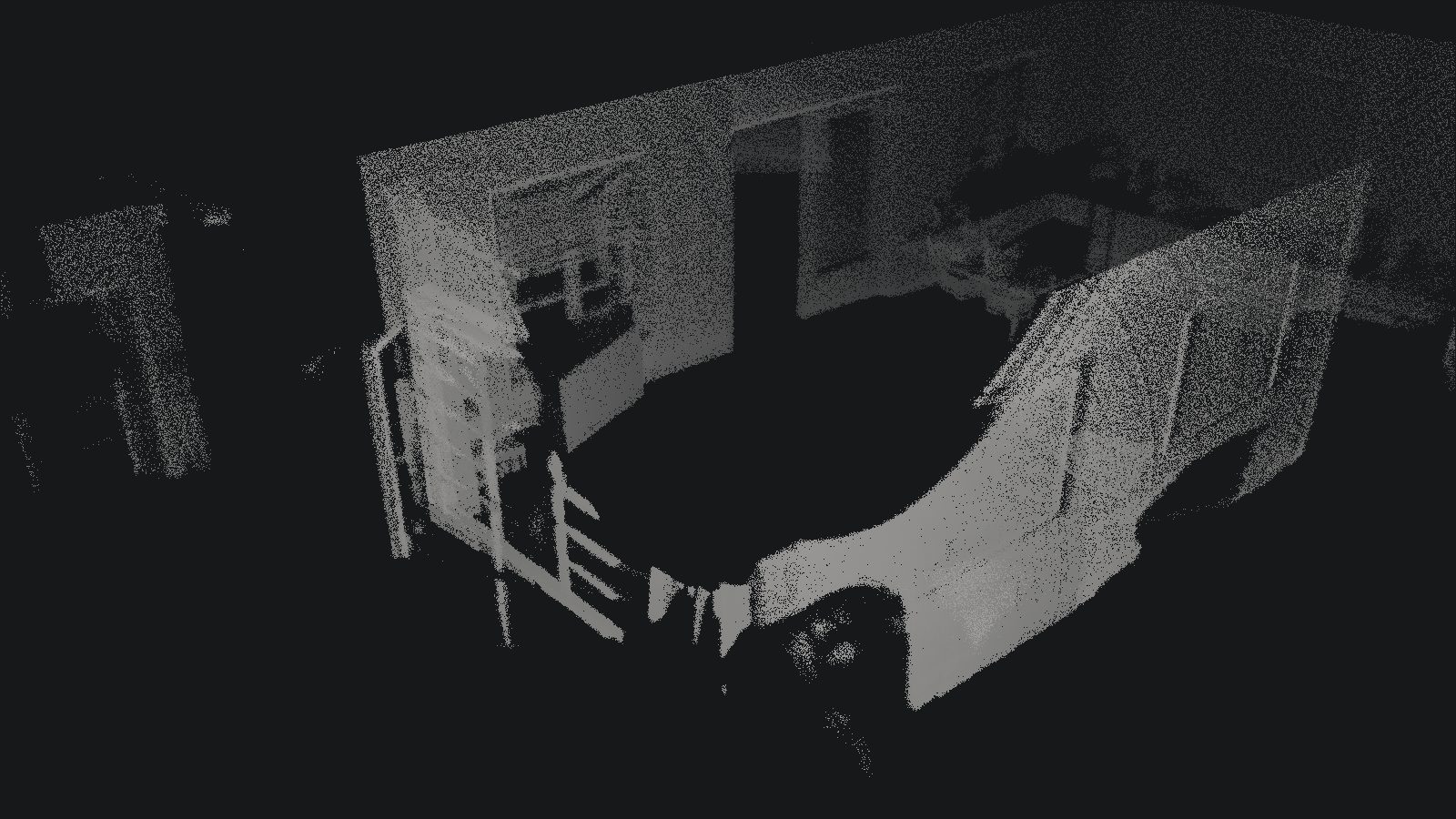
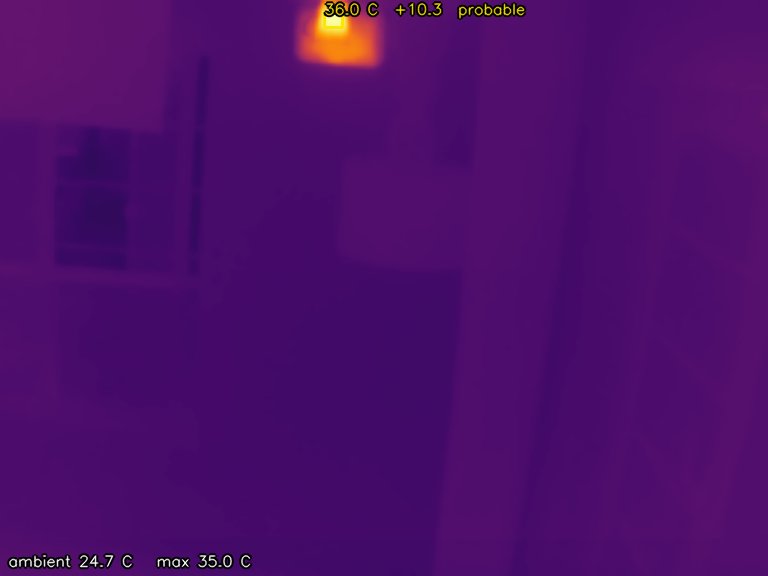
The sensor head is built and running on our bench. It scans everything around it in 3D, ten times a second, and reads a temperature for every pixel of its thermal image twice a second. When something is hotter than it should be, the software finds it, measures it and grades it against the industry severity scale by itself.
Next, the temperatures go onto the 3D map so every hot spot has an exact location, and the head goes onto its chassis.
One round, and only the last step needs a person
-
01 Machine
Arrive
It drives to the next asset on the route, stops at the marked spot and faces it the same way it did last time.
-
02 Machine
Measure
It takes the temperature of every marked point on the asset and keeps the thermal and optical image with the reading.
-
03 Machine
Compare
It checks each reading against that asset's own history and against its neighbours. Normal readings go into the trend. A reading outside its band is flagged.
-
04 Machine
Alert
It sends the flagged reading straight to the people you nominate and to the control room you already run, with the thermal image, the asset's history and its location. Nothing waits for the end of the round.
-
handover
A person joins here, and only if something changed.
-
05 Engineer
Decide
Your reliability engineer looks at the reading and decides what happens next: keep watching it, plan the work, or stop the machine before it fails.
Who is behind this
Noctra Robotics is a South African company founded by engineers who design, deploy and operate industrial autonomous vehicle fleets for a living. RATEL, our first robot, is that trade practised on our own account: the same navigation discipline, built and serviced in South Africa, with rand pricing instead of dollar invoices and an offshore support queue.
We build for the conditions this country actually has. Dust, heat, hail, load shedding, and a network that drops when it feels like it. A robot that only works on a clean floor on a cool night is not an industrial machine.
No unit we build will ever carry a weapon. That is a design principle and a contract clause. Measurement, detection and a clean record are the job; force stays with people who are trained and licensed to use it.